
Why Your Cortisol is Holding Your Waistline Hostage
If you have spent hours in the gym, maintained a strict diet, and followed every "clean eating" rule only to see your midsection remain unchanged, you aren't lacking willpower. You are likely the victim of a hormonal stalemate. While we are taught that weight loss is a simple equation of "calories in vs. calories out," the reality is governed by your endocrine system—specifically a hormone called cortisol.
Cortisol is often labeled the "stress hormone," but more accurately, it is your body's primary survival signal. When this signal stays "on" for too long, it creates a biological blockade that makes fat loss—particularly visceral fat loss—nearly impossible.
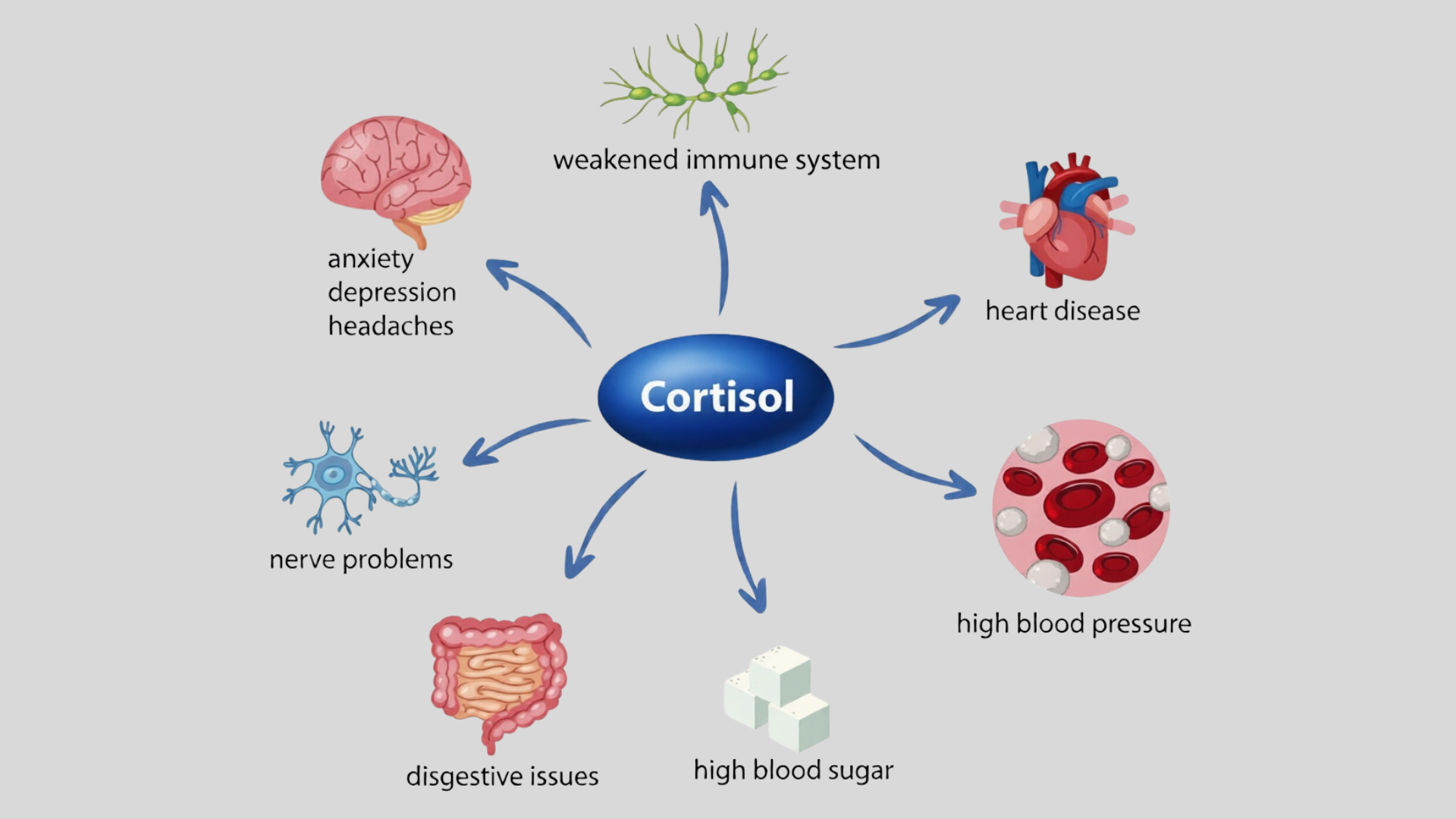
Cortisol affects your entire physiology.
1. The Biological Mandate: Why Stress Equals Fat Storage
From a primal perspective, cortisol was designed to save your life. In a "fight or flight" scenario, a spike in cortisol triggers your liver to dump glucose (sugar) into the bloodstream to provide immediate energy for your muscles to outrun a predator.
However, in the modern world, the "predator" is a demanding boss, financial pressure, or the blue light of a smartphone at 11 PM. Because you aren't physically running away from these stressors, that dumped glucose has nowhere to go. To protect your organs from high blood sugar, your body releases insulin to shuttle that sugar into storage. Since cortisol receptors are most densely packed in the abdominal region, this energy is preferentially stored as visceral fat—the dangerous fat that surrounds your internal organs.
As Dr. Mindy Pelz notes, a landmark study in the Journal of Obesity confirmed a direct correlation between high cortisol levels and increased abdominal fat. When cortisol is high, your body is effectively told that it is in a state of "famine or war," and it will cling to every calorie as a survival mechanism.
2. The Nighttime Sabotage: Cortisol vs. Growth Hormone
Fat loss doesn't actually happen while you are at the gym; it happens while you sleep. This process is managed by Human Growth Hormone (HGH), the body’s "night manager" responsible for repair and fat oxidation.
The problem is that cortisol and HGH are functional opposites. If cortisol—the "day manager"—is still elevated at bedtime due to late-night scrolling or caffeine, HGH cannot clock in. According to sleep science research, the first few hours of deep sleep are the most metabolically active. If your nervous system is still "wired" from evening stress, you bypass the deep sleep stages where visceral fat is burned, leaving you exhausted and inflamed the next morning.
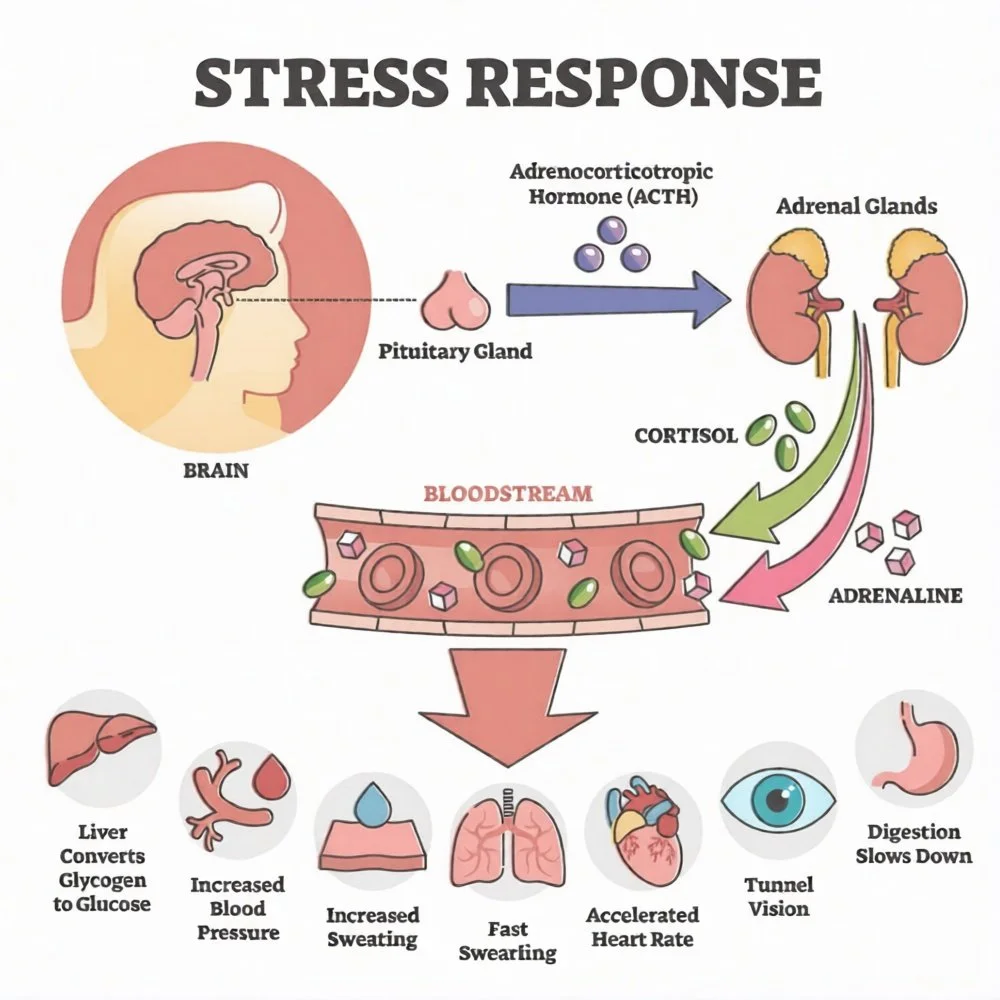
How constant stress harm your body and your health deteriorates.
3. Evidence-Based Strategies to Drop the Signal
To unlock fat loss, you must move your body out of a "protection" state and into a "repair" state. Here is how to biologically lower the cortisol shield:
Utilize the Energy (The "Burn-Off" Method)
Since cortisol is designed to make you move, sitting still while stressed is metabolically damaging. If you experience a stress spike during the day, engage in a few minutes of intense movement—jumping jacks, a brisk walk, or air squats. This utilizes the glucose dumped into your blood before it can be converted into belly fat.
The Japanese "Evening Shutdown" Protocol
In Japan, where obesity rates remain remarkably low despite low gym attendance, the focus is on calming the nervous system.
Thermal Regulation: A warm shower 90 minutes before bed helps drop your core body temperature afterward, a biological trigger for sleep and cortisol reduction.
The Brain Dump: Writing down a "to-do" list for the following day closes "open loops" in the brain. This reduces the mental load that keeps the adrenal glands on high alert.
Eliminate Chemical Stressors
A 2023 study highlighted by Dr. Pelz found that artificial sweeteners (like sucralose and aspartame) can actually trigger a cortisol response and increase oxidative stress. These "diet" chemicals trick the brain and accelerate the very fat storage they are meant to prevent. Switching to natural, non-insulin-spiking alternatives like monk fruit can remove this hidden chemical stress.
The Breath as a Remote Control
You can manually override a stress response using the Vagus Nerve. Deep, diaphragmatic breathing with an exhale that is longer than the inhale (such as inhaling for 4 seconds and exhaling for 8) hits the "brake pedal" for your heart. This signals the brain that the "threat" has passed, allowing cortisol to drop and fat-burning pathways to reopen.
Final Thought: Stability is the Key to Vitality
Your body is not "broken" and it isn't trying to make your life difficult. It is simply responding to the environment you are providing. If that environment is one of constant "high-beta" noise and stress, the body will choose protection (fat storage) over aesthetics every time.
By lowering the cortisol signal through intentional movement, cooling the body, and silencing the mental noise, you allow your natural metabolic rhythm to return. When the body feels safe, the fat falls away as a natural byproduct of health.
With Clarity and Love,
Ronnie Yap
Trauma-Informed Guide & Founder of The Untangled Minds Movement
